Home Buyers Practical Guide to Preapproval and Loan Choices: Lenders, Rates, and New Construction

A loan can look affordable in a listing estimate and still feel very different once taxes, insurance, interest, fees, and timing enter the picture. That is why the lending process should start before the house hunt gets serious.
Preapproval, loan type, lender choice, and construction timeline can all change the final cost of buying a home. The right lender does more than quote a rate. A good lender explains tradeoffs, documents what the loan requires, and helps avoid surprises before a contract is signed.
This guide walks through the main pieces of the lending process, including preapproval, fixed-rate loans, adjustable-rate loans, government-backed loans, and the difference between new construction lenders and traditional lenders. It is informational only and not financial advice, but it can help make the next conversation with a lender more useful.

Why preapproval matters before choosing a loan
Preapproval is more than a polite letter from a lender. It is a lender’s conditional review of a borrower’s finances. During preapproval, the lender typically checks credit, income, assets, debts, and employment history. The result is an estimate of how much the lender may be willing to finance, subject to underwriting, appraisal, title review, and other conditions.
The Consumer Financial Protection Bureau explains that a mortgage application generally depends on several core factors, including credit history, income, debts, assets, and the property itself. Preapproval puts many of those items under early review.
That early review matters for three reasons.
First, it sets a realistic price range. A buyer may qualify for a loan amount that looks high on paper but feels tight after monthly expenses. Preapproval helps separate “approved” from “comfortable.”
Second, it strengthens an offer. Sellers and builders often want to know that financing has already been reviewed. A preapproval does not guarantee final approval, but it usually carries more weight than a casual estimate.
Third, it exposes problems early. A credit reporting error, a high debt-to-income ratio, or a recent job change can slow down approval. Finding out before making an offer gives time to fix issues or adjust the plan.
A strong preapproval usually requires documents such as:
Recent pay stubs or income records
W-2s, tax returns, or business income documents
Bank and investment account statements
Credit authorization
Identification
Information about current debts
Self-employed borrowers may need more documentation because income can vary. Lenders often review tax returns, profit and loss statements, business accounts, and the stability of the business. That does not mean approval is out of reach. It means the file may need stronger documentation.
A useful preapproval should also explain the assumptions behind the number. For example, a preapproval based on a 20 percent down payment may not apply if the buyer later chooses a 5 percent down payment. Property taxes, homeowners association dues, and insurance can also change the final approval amount.
How to shop around without getting lost in rate quotes
Rate shopping is one of the most practical ways to reduce borrowing costs. The CFPB has long encouraged borrowers to compare offers because mortgage rates and fees can vary by lender. Even a small rate difference can matter over the life of a loan.
The key is to compare the same type of offer at the same point in time. Rates move with market conditions, so a quote from Monday may not match a quote from Friday. One lender’s “low rate” may also include higher discount points or fees.
A better comparison includes the whole structure of the loan.
What to compare | Why it matters |
Interest rate | Affects monthly principal and interest payment |
Annual percentage rate | Includes interest and certain loan costs, useful for comparison |
Discount points | Upfront cost paid to lower the rate |
Lender fees | Can affect closing costs |
Loan term | 15-year and 30-year loans have different payments and total interest |
Rate lock period | Important if closing is weeks or months away |
Prepayment penalty | Rare on many consumer mortgages, but worth checking |
Estimated cash to close | Shows down payment plus closing costs and prepaid items |
A Loan Estimate is especially helpful. Under federal rules, lenders must provide a Loan Estimate after receiving a completed mortgage application with key information. The form is standardized, which makes it easier to compare costs across lenders.
When shopping for a Home Loan, ask each lender for the same scenario. Use the same purchase price, down payment, estimated credit score range, property type, and closing timeline. That makes the comparison cleaner.
Good questions to ask include:
How long is the rate locked?
What happens if the closing date moves?
Are discount points included in this quote?
What fees are charged by the lender?
Which costs are estimates from third parties?
How often will the loan officer update the file?
Who handles underwriting and closing communication?
The lowest rate is not always the best deal. If one lender is cheaper but repeatedly misses deadlines, the risk can be costly, especially in a competitive purchase or a new construction transaction with a firm closing schedule.

The main loan types and how they work
Most mortgage choices come down to how the interest rate behaves, who backs the loan, and what the borrower must qualify for. The right option depends on credit, income, down payment, planned time in the home, and risk tolerance.
Fixed-rate loans provide payment stability
A fixed-rate mortgage keeps the same interest rate for the life of the loan. The principal and interest payment stays the same, though the total monthly payment may still change if taxes, insurance, or association dues change.
Fixed-rate loans are common because they are simple to understand. A 30-year fixed-rate loan usually has a lower monthly payment than a 15-year fixed-rate loan, but the borrower pays interest for a longer period. A 15-year loan typically builds equity faster and costs less in total interest, but the monthly payment is higher.
Fixed-rate loans can fit borrowers who:
Plan to stay in the home for many years
Prefer predictable payments
Want less exposure to future rate changes
Value simplicity over short-term savings
The tradeoff is that fixed rates can start higher than the initial rate on an adjustable-rate mortgage when the market prices them that way. Stability has value, and the market often reflects that.
Adjustable-rate loans trade early savings for future uncertainty
An adjustable-rate mortgage, often called an ARM, has an interest rate that can change after an initial fixed period. A common structure is a loan with a fixed rate for the first several years, then periodic adjustments based on a market index plus a margin.
ARMs often include caps that limit how much the rate can change at the first adjustment, each later adjustment, and over the life of the loan. Those caps are critical. A low starting payment may become much higher if rates rise after the fixed period ends.
An ARM may fit a borrower who plans to sell or refinance before the adjustment period, or who can handle a higher future payment. It may be risky for someone who needs long-term payment certainty.
Before choosing an ARM, confirm:
The length of the initial fixed period
The index and margin
The first adjustment cap
The periodic adjustment cap
The lifetime cap
The maximum possible monthly payment
The maximum payment matters more than the starting payment. If the highest possible payment would strain the budget, the loan deserves a closer look.
Government-backed loans can open doors for eligible borrowers
Government-backed loans are made by approved lenders but insured or guaranteed by a federal agency. They can help eligible borrowers qualify with lower down payments, more flexible credit requirements, or special benefits. Requirements vary by program and lender.
Common examples include:
Loan type | Key feature | Common fit |
FHA loan | Insured by the Federal Housing Administration | Borrowers with modest down payments or less-than-perfect credit |
VA loan | Guaranteed by the Department of Veterans Affairs | Eligible service members, veterans, and some surviving spouses |
USDA loan | Backed by the U.S. Department of Agriculture | Eligible buyers in qualifying rural or suburban areas |
FHA loans often allow lower down payments than many conventional loans, but they require mortgage insurance. VA loans can offer major benefits for eligible borrowers, including the possibility of no down payment, though funding fees and eligibility rules apply. USDA loans focus on eligible properties and income limits in approved areas.
Government-backed does not mean automatic approval. Lenders still review credit, income, debts, assets, and the property. The property must also meet program standards.
Conventional loans remain a flexible option
Conventional loans are not insured by FHA, VA, or USDA. They may be conforming loans that meet Fannie Mae or Freddie Mac guidelines, or nonconforming loans such as jumbo loans.
Conventional loans can work well for borrowers with stronger credit, stable income, and enough funds for down payment and closing costs. Private mortgage insurance may apply if the down payment is below 20 percent, but it may be removable later if requirements are met.
For many borrowers, the real comparison is not “government-backed versus conventional.” It is the total cost, qualification fit, and risk profile of each option.
New construction lenders and traditional lenders are not always the same
Buying an existing home and financing new construction can feel similar at first. Both involve preapproval, underwriting, appraisal, title work, and closing costs. The difference is timing.
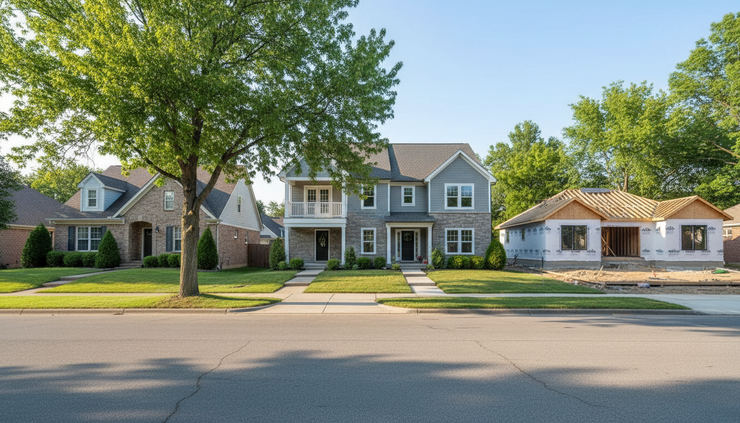
Traditional lenders usually finance homes that already exist. The home can be inspected, appraised, insured, and closed on a set schedule. New construction adds extra questions. The property may not be finished, the builder may have preferred lender relationships, and the closing date may depend on permits, materials, inspections, weather, or utility connections.
New construction lenders often understand builder timelines and construction-specific requirements. Some are affiliated with or recommended by builders. Others are independent lenders with construction experience.
Why builders often suggest preferred lenders
Many builders encourage buyers to use a preferred lender. The reason is partly coordination. A lender that regularly works with the builder may understand the subdivision, contract structure, deposit rules, upgrade process, and expected closing timeline.
Preferred lenders may also offer incentives, such as credits toward closing costs or rate buydowns. These benefits can be valuable, but they should be compared against the full loan cost. A $5,000 credit may not be the best deal if the rate or fees are much higher than another lender’s offer.
A smart approach is to compare the builder’s preferred lender with at least one or two outside lenders. Ask each lender to show the same purchase price, upgrade costs, down payment, and expected closing date.
New construction loans may have extra requirements
New construction financing may involve requirements that are less common with existing homes.
Examples include:
Builder approval by the lender
Review of construction plans and specifications
Appraisal based on plans, finishes, and comparable sales
Longer rate lock needs
Final inspection or certificate of occupancy before closing
Rules for deposits and upgrade payments
Possible changes if the appraised value differs from the contract price
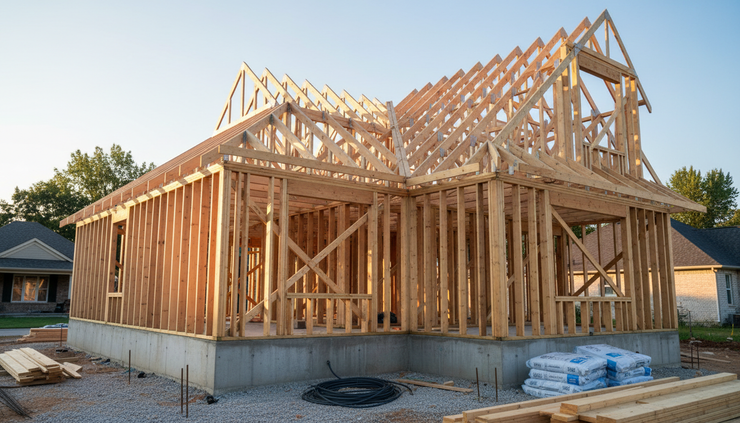
If the home will take several months to finish, rate lock strategy becomes important. Some lenders offer extended rate locks for new construction, sometimes with fees or float-down options. A float-down may allow the borrower to take a lower rate if market rates fall before closing, subject to lender rules.
Traditional lenders may still handle new construction well, especially if the loan closes after the home is complete. The key is whether the lender understands the builder contract and can meet the timeline.
Construction-to-permanent loans serve a different purpose
A buyer purchasing from a large builder often uses a standard mortgage that closes when the home is complete. A construction-to-permanent loan is different. It is commonly used when a borrower is building a custom home and needs funds released during construction.
During construction, the lender may release money in draws as work is completed. After construction, the loan converts into a permanent mortgage. These loans requires more oversight because the lender tracks construction progress, budget, permits, and inspections.
They can reduce the need for two separate closings, but they also require careful planning. Borrowers usually need detailed plans, a qualified builder, cost estimates, and contingency funds.
How to decide which lender and loan fit best
The best loan is not always the one with the lowest advertised rate. It is the one that fits the property, closing timeline, cash available, and long-term plan.
Start with the monthly payment, but do not stop there. Review total cash to close, mortgage insurance, rate lock terms, and the estimated cost over the time the loan is likely to be held. Someone planning to stay for 20 years may value a different structure than someone expecting to move in five years.
A simple decision process can help.
Get preapproved before serious shopping.
This shows what a lender may approve and helps catch problems early.
Compare at least three lender offers.
Use the same assumptions for each quote so the comparison is fair.
Match the loan type to the time horizon.
A fixed-rate loan may fit long-term stability. An ARM may make sense only when future payment risk is manageable.
Check government-backed eligibility.
FHA, VA, and USDA programs may offer advantages, but each has rules and costs.
Treat builder incentives as one part of the deal.
A credit from a preferred lender can help, but compare the rate, fees, and lock terms.
Read the Loan Estimate closely.
Look beyond the payment. Review closing costs, prepaid items, lender fees, and cash to close.
Ask about timing risk.
This matters for new construction, where delays can affect rate locks and closing schedules.
Mortgage Lending works best when the borrower, lender, real estate agent, and builder, if there is one, share accurate information early. Surprises often cost money. Clear documentation and steady communication reduce that risk.
The practical takeaway
Preapproval gives the lending process a foundation. Loan shopping adds perspective. Understanding fixed-rate, adjustable-rate, government-backed, conventional, and new construction options helps turn a confusing set of choices into a manageable decision.
The next step is straightforward: gather income, asset, debt, and credit information, then ask lenders for comparable quotes. For new construction, ask about builder approval, extended rate locks, final inspections, and incentives before signing a contract.
A good loan should match the home, the timeline, and the budget. The more clearly those pieces line up before closing, the fewer surprises there are after move-in.


Comments